
HKCNSA Participates in CCS2026 Cybersecurity Technology Exchange Event

In September 2026, China Cybersecurity Week was held across multiple locations nationwide. This year’s event carried the theme “AI for Good, Security with Purpose,” with the main venue in Jinan, Shandong, and parallel activities held across the country. The 6th CCS Chengdu Cybersecurity Technology Exchange Event, as a core sub-event of the China Cybersecurity Week Chengdu Series, opened on 15 September in Chengdu, focusing on agent security, large model security ecosystems, and AI governance.
CCS2026 event venue
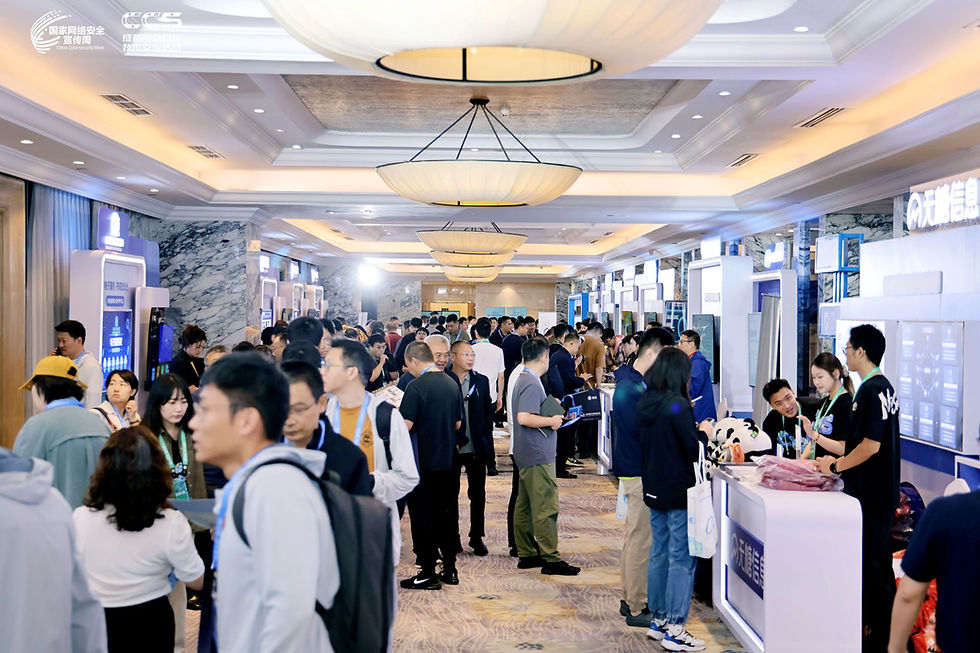
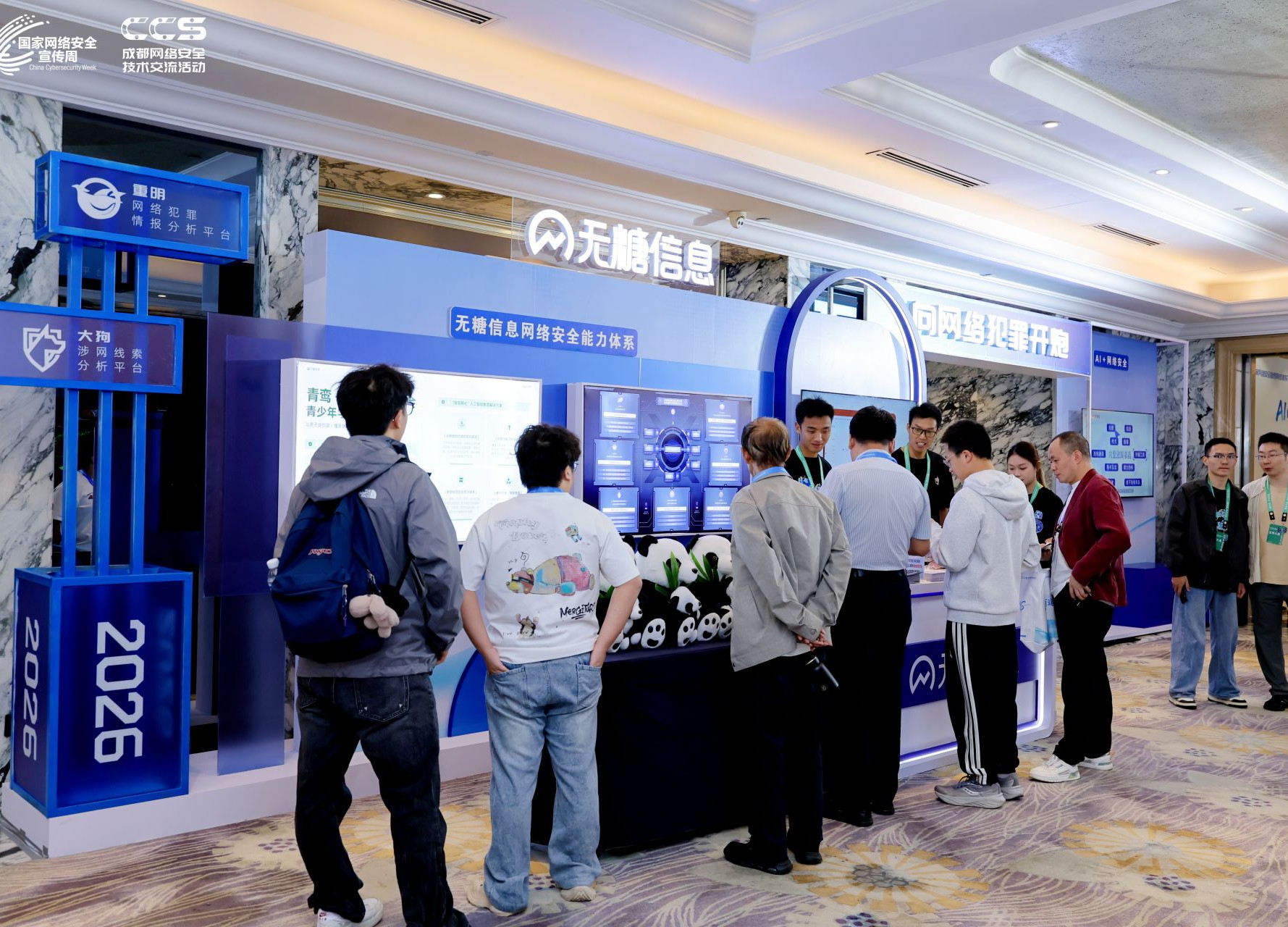
Opening ceremony


The Hong Kong China Network Security Association (HKCNSA) participated in the China Cybersecurity Week Chengdu Series for the third consecutive year. In 2026, the Association participated as a Diamond Partner in the 6th CCS Chengdu Cybersecurity Technology Exchange Event, and co-hosted the Chengdu-Hong Kong Cyber Security Technology Exchange Event with Chengdu Nosugar Technology Co., Ltd. The Cyber Security and Technology Crime Bureau (CSTCB) of the Hong Kong Police Force joined as a co-participant, and the event was co-organised by the Big Data and Artificial Intelligence Security Committee of the Chinese Association for Cryptologic Research. Representatives from the Association and the Hong Kong Police Force attended the opening ceremony and exchanged views with industry experts from Chengdu, Hong Kong, and across the country at the exhibition booth, introducing the Association’s work in cybersecurity.
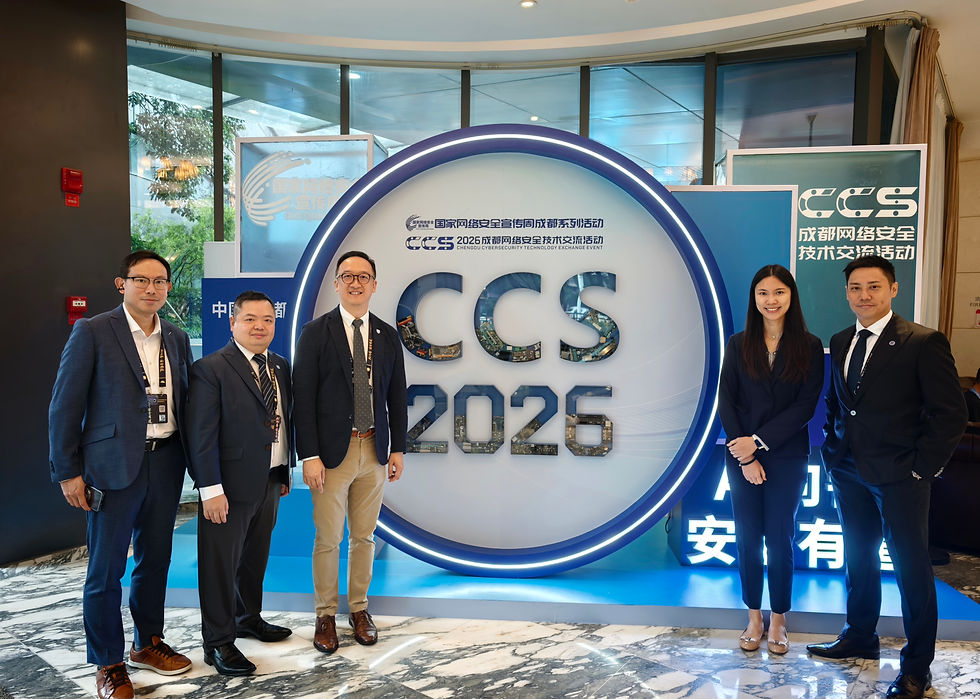
HKCNSA and CSTCB, Hong Kong Police Force, formed the Hong Kong delegation



The Chengdu-Hong Kong Cyber Security Technology Exchange Event was moderated by Mr. Li Gang, Deputy Director of China Information Security Magazine. It focused on black and grey industry governance, telecom fraud tactics, and corporate compliance in cross-border digital activities, covering topics including AI security compliance, talent development, AI threat identification, AI fraud prevention, vulnerability governance, and large model privacy.

Mr. CHAN Wing-kin, Detective Senior Inspector of the CSTCB, Hong Kong Police Force, shared “AI Safeguarding Hong Kong, Smartly Cracking Scams,” introducing three measures: Scameter, RAPID, and SOCA. He noted that in 2025, fraud cases reached 43,212, accounting for 48.5% of Hong Kong’s total crime figures, with tactics evolving rapidly and often involving cross-border and cross-jurisdictional elements. Scameter combines public reports, query data, and multi-source intelligence with an AI analysis engine to provide alerts on suspicious calls and websites. The RAPID system processes approximately 1,000 to 1,200 URLs daily, with a success rate of about 70% in taking down or blocking them. The intelligence is also shared with banking and telecommunications partners, resulting in over 56,000 high-risk transactions being intercepted or cancelled in 2025.

Mr. John Wan, Director of the Cybersecurity Committee of HKCNSA, shared “Cybersecurity Talent Training and New Opportunities for Industry Development in the AI Era,” noting that cybersecurity challenges in the AI era are reflected in intelligent attacks, an expanding attack surface, rising compliance and regulatory pressure, and a persistent talent gap. He analysed the complementary advantages of the Mainland and Hong Kong: the Mainland possesses industrial scale, application scenarios, and practical experience, while Hong Kong has advantages in international standards, risk governance, and cross-cultural communication. He recommended a “front-end research, back-end support” model to cultivate composite talent with both cutting-edge AI technology and international financial-grade security compliance, and called for joint action by government, industry, academia, and enterprises to build a sustainable talent and industry ecosystem.

Ms. WONG Man-hei, Senior Inspector of the CSTCB, Hong Kong Police Force, shared “Identifying AI Threats, Building Cyber Defences Together,” starting from global and Hong Kong technology crime trends. She noted that in the first quarter of 2026, cyber attack cases reached 14,052, up 13.6% year-on-year, with losses amounting to HK$2.65 billion, and ransomware cases rising 40%. She analysed AI development and application risks, including prompt injection, supply chain attacks, data leakage, over-reliance, and six major risks of agentic AI. She used three practical cases—AI-generated images, AI-generated identities, and the ExploitGym incident—to illustrate how AI is used as a criminal tool. She proposed four lines of defence: first, “single-line responsibility, human in the loop,” with AI alerts supporting officer confirmation and action; second, laws and regulations covering legality, privacy protection, fairness bias, and information security; third, network defence preparation, including enhanced model auditing, multi-factor authentication, least privilege, and continuous monitoring; fourth, public-private cooperation, establishing cross-sector mechanisms to facilitate intelligence sharing and rapid response.

Mr. Andrew Pang, Principal Consultant of HKCNSA, shared “AI Security Compliance and Cross-Border Cooperation in Cross-Border Logistics and Multiple Jurisdictions,” noting that AI has entered core operational processes, with model outputs directly affecting personnel, goods, and transactions. Overlapping regulatory rules across multiple jurisdictions, reliance on third-party AI, and cross-border incident handling all make accountability boundaries more complex. He used two scenarios—driver identity verification and AI customer service—to illustrate risks, including centralised storage of biometric templates, purpose expansion and third-party transfers, and the easily overlooked high sensitivity of voiceprints. He recommended that enterprises establish a unified compliance matrix, mapping the EU AI Act and GDPR, Brazil’s LGPD, Hong Kong’s PDPO, and US federal and state requirements onto a single set of standardised controls, supported by tiered data governance, privacy-enhancing technologies, data protection impact assessments, and third-party management. He concluded that enterprises should adopt a single control framework for multi-jurisdiction reuse, assess first and then select locations, and prioritise data minimisation.

The panel discussion, themed “Risk Game and Security Governance of the Cyber Black and Grey Industry under AI,” was moderated by Mr. Li Gang. Participants included Mr. David Ip, Founding Chairman of HKCNSA; Ms. WONG Man-hei of the Hong Kong Police Force; Mr. Zhang Ruidong, CEO of Chengdu Nosugar Technology Co., Ltd.; Mr. Tan Xiaosheng, Founder of Beijing Cyber Yingjie Technology Co., Ltd.; Professor Wang Jianfeng of Xidian University; and Associate Professor Hu Hongsheng of Shanghai Jiao Tong University.


The discussion noted that AI is turning the cyber black and grey industry from a "workshop" into a "factory." Face-swapping and voice cloning have driven the cost of fraud close to zero, and AI Agents have enabled remote operations at scale. The six guests exchanged views from the perspectives of practical confrontation, police intelligence, enterprise security, association collaboration, and academic research, covering topics such as the corporate operation of black and grey industries, the identification and tracing of deepfakes, the allocation of enterprise defence resources, and the differences between Chengdu and Hong Kong in cross-border data flows and evidence admissibility rules.

This year marks the Association’s third consecutive year participating in the CCS Chengdu Cybersecurity Technology Exchange Event. In 2024, the Association was first invited to attend and served as a co-organiser of the Hong Kong/Macau/Chengdu Cybersecurity Technology Exchange Event. In 2025, the Association participated in the “Secure Global Expansion” segment, focusing on cross-border data governance. In 2026, the Association participated as a Diamond Partner and co-hosted the Chengdu-Hong Kong Cyber Security Technology Exchange Event with Chengdu Nosugar Technology Co., Ltd., with participation level and scale continuing to rise. The Association will continue to leverage such platforms to promote exchanges and cooperation between Chengdu and Hong Kong in cybersecurity policy, technology, and talent.


