HKCNSA Cyber Resilience Luncheon Focuses on Incident Response and Recovery Strategies for Critical Infrastructure

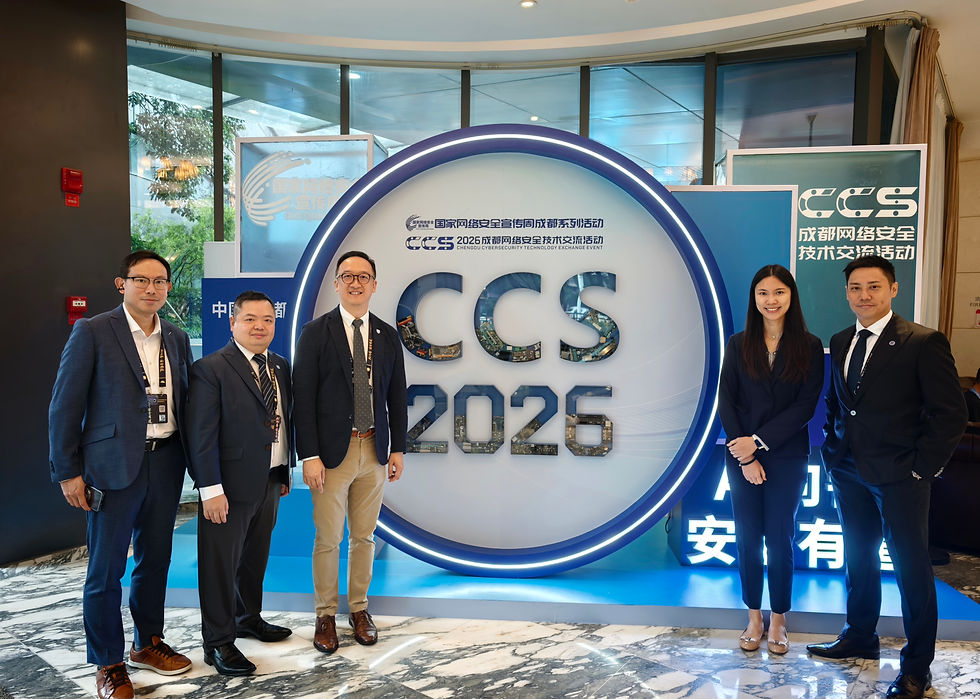
On 24 September 2026, the Hong Kong China Network Security Association (HKCNSA) hosted the “Cyber Resilience Strategies for Critical Infrastructure Luncheon” at The Park Lane Hong Kong. As part of the National Cybersecurity Awareness Week series of events, the luncheon was held in support of this year’s theme, “AI for Good, Security with Purpose”, with a focus on the cyber threats facing critical infrastructure in the AI era and the importance of cyber resilience, incident response, and recovery strategies. The event brought together representatives from the energy, utilities, financial services, and cybersecurity sectors to share insights and exchange perspectives on these important topics.

The event commenced with welcome remarks by Mr. David Ip, Founding Chairman of HKCNSA. He noted that cyber resilience has become an increasingly important issue for operators of critical infrastructure. Beyond preventing cyberattacks, organizations must also strengthen their capabilities in risk management, incident response, and rapid recovery. He expressed his hope that the luncheon would provide a valuable platform for industry professionals to exchange experiences and collectively enhance the resilience of Hong Kong’s critical infrastructure.

The first keynote session was delivered by Michael Chung, Senior Systems Engineer at Everpure, under the theme“Air-Gaps don't always work. How does Tier 0 – Zero Data Move Recovery helps?”. Using a ransomware scenario as an example, he explored the response and recovery challenges organizations face following large-scale system encryption incidents and discussed the limitations of traditional backup architectures in meeting recovery time and recovery point objectives.
Michael Chung introduced layered backup and recovery architectures, including the 3-2-1-1-0 backup model, immutable backups, and Zero Data Move Recovery. He shared how snapshots, off-site backups, and automated recovery mechanisms can strengthen cyber resilience. He emphasized that, beyond protecting data, minimizing recovery time and reducing business disruption are equally important considerations in recovery planning.

The second keynote speaker, Tony Lee, Head of Solution Engineering at TrendAI, delivered a presentation titled “AI-Era Vulnerability Management: Why Virtual Patching Has Become Essential for Critical Infrastructure.” He explained how advances in AI are accelerating both vulnerability discovery and exploitation, creating increasing pressure on organizations’ vulnerability management programs. Traditional patch-based approaches alone may no longer be sufficient to address increasingly compressed attack windows.
Tony Lee examined the impact of AI-driven attacks on critical infrastructure and highlighted the role of virtual patching in risk management. He recommended that organizations combine risk-based prioritization, continuous monitoring, and virtual patching to reduce exposure windows and improve overall cyber resilience.

Following the luncheon, a panel discussion was held under the theme “From Compliance to Rapid Recovery: Legal Response and Crisis Management in Cyber Incidents.” The session was moderated by Anthony Chow, Chief Cyber Security Consultant at I-Tracing. Panelists included Wilson Tang, Vice chairman of HKCNSA; Pete Lau, Senior IT Manager – Security & Planning at The Hong Kong and China Gas Company Limited; and Alan Lee, Senior Manager – Cyber Advisory at CLP Holdings Limited. Drawing on experiences from the telecommunications, utilities, energy, and financial sectors, the speakers shared their perspectives on building cyber resilience.
Panelists noted that critical infrastructure organizations currently face a range of threats, including nation-state attacks, ransomware, supply chain attacks, and emerging AI-driven threats. They observed that cyberattacks increasingly target operational continuity and physical services rather than focusing solely on data theft, making cyber resilience a strategic priority for organizations.

The discussion also covered governance and recovery strategies, including risk management frameworks, incident reporting mechanisms, network segmentation, Zero Trust architecture, and continuous monitoring. Panelists highlighted the importance of cross-functional exercises, backup recovery testing, manual fallback procedures, and pre-authorized response mechanisms in strengthening an organization’s ability to respond to and recover from cyber incidents.
HKCNSA extends its sincere appreciation to Everpure, TrendAI, I-Tracing, and all speakers and guests for their support and participation. The luncheon facilitated meaningful exchanges on critical infrastructure protection, cyber resilience, and recovery strategies, while strengthening collaboration among professionals from different sectors.
Looking ahead, HKCNSA will continue to promote industry dialogue on critical infrastructure protection, cyber resilience, and cybersecurity governance, and encourage the sharing of practical experiences to further strengthen Hong Kong’s digital resilience.